What should you actually pack for a buggy session?
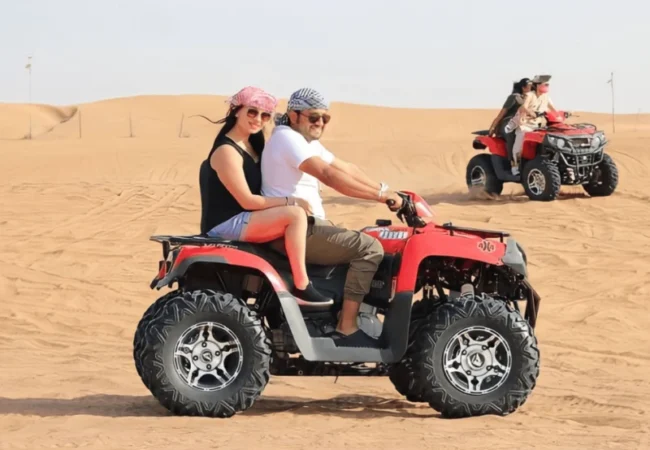
Closed-toe shoes and sunglasses are the only two things that really matter. Everything safety-related, helmet, goggles, harness, is handed to you on site. Bring a phone strap if you plan to film, ID for the booking desk, and clothes you are fine losing to red sand.
The packing list is shorter than most people expect, mostly because the operator supplies the parts that actually protect you. Helmet and goggles are handed out at the briefing and fitted before anyone moves, so neither needs to travel in your bag. What you do need to bring is closed-toe shoes. Sandals, flip-flops or anything open at the front gets flagged during the pre-drive check, and if you show up in them, the desk sometimes has a spare pair to lend, but that is a fix, not a plan. Sunglasses are not mandatory but worth having, since goggles alone do not always cut the glare on a bright afternoon before you are moving fast enough to need them for wind.
Clothing matters more for comfort than safety. Fine red sand works into pockets, seams and shoes no matter how carefully you dress, so it makes sense to wear something disposable-ish and keep a change waiting for afterward. A light long-sleeve layer is worth it in cooler months, since the wind picks up once you are moving, though it is genuinely optional rather than anything the guide checks for.
If you plan to film, a wrist strap or chest mount beats holding a phone loose, since a moving buggy on sand is not a stable platform and a dropped phone in soft sand is a genuine hassle to recover. Bring ID too. It is not always asked for, but the desk sometimes wants a quick check against the name on the reservation, and having it on hand avoids a delay right when everyone else is already gearing up, a detail covered alongside pickup logistics in the where we ride section above.
Water is one thing you do not need to pack. Chilled water is part of every session regardless of duration, alongside the fuel and the pre-ride vehicle check covered in the safety section above, so there is no reason to arrive with your own bottle unless you would rather have one closer to hand during the drive out.
What actually happens in the 15 minutes before you're handed the wheel?
Gear goes on first, then a walkthrough of the controls at your specific machine: kill switch, throttle, harness, hand signals. That is followed by a supervised warm-up lap on flat ground, and how you handle it shapes the route you get next.
The fifteen minutes before you drive are not filler. They are the part of the session that decides how the rest of it goes, and they follow the same order for every booking regardless of which machine you picked. First, gear: helmet and goggles fitted and checked, harness adjusted to your size rather than handed over loose. This happens standing next to your actual buggy, not in a tent away from the machines, so the controls being described are the ones right in front of you.
Next comes the walkthrough itself, and it covers more ground than a quick verbal rundown. The guide points out the kill switch and has you find it without looking. Throttle response gets demonstrated, since a buggy's pedal is more sensitive than a car's and a light touch goes further than people expect the first time. Hand signals come next: what a raised hand means, how the guide indicates slow down versus stop, and how you signal back if you want either. Questions at this point get a real answer rather than a nod to move things along.
The warm-up lap follows immediately, on a flat, open patch of ground before any real dune is involved. This is the part that actually determines your route. The guide is not just filling time, they are watching how you handle the throttle, how quickly you find the kill switch if asked, and whether the machine feels controlled under you. A confident lap tends to open up more of the route, the same judgment call that also shapes which machine a guide suggests on a return visit.
For groups, this stage runs in parallel rather than one person at a time holding everyone up. Multiple guides work a group briefing simultaneously when the booking is larger, so a family or a group of friends on a combo package is not stuck watching four separate warm-up laps before anyone gets moving. Ten to fifteen minutes covers the whole prep stage, gear through warm-up, and that number holds steady no matter which duration you picked off the menu, since it's the one stage that doesn't stretch alongside the ride itself. Slowing down here matters because a rushed briefing is exactly where avoidable mistakes creep in, not because anyone is being precious about a fairly simple machine.
Can a group stop mid-session for photos, or does the guide keep everyone moving?
Yes. Raise a hand and the guide slows or stops the group, the same signal covered in the pre-drive briefing. Stops are not scheduled in advance on shorter sessions, but they happen whenever someone actually wants one.
This comes up constantly, usually from people worried that a guide-led group is going to move through the dunes with no room to actually look at them. It is the opposite in practice. The hand signal for slow-or-stop, covered before anyone moves, is exactly the tool riders use to call a photo stop, and part of the guide's job during the ride is watching for that signal from anyone in the group, not just leading the route.
On the 30-minute session there is naturally less room for extended stops, since a chunk of that half hour is the briefing and warm-up covered earlier in this guide. Even then, a quick pause for a photo at a ridge line is normal and does not eat meaningfully into the ride. On the one-hour and two-hour bookings, stops happen more freely, and the guide will often call one unprompted at a particularly good vantage point rather than waiting for someone to ask.
Group dynamics matter here. A single rider or a couple on a 2-seater has an easier time calling a stop than a large mixed group, simply because fewer people need to agree on timing. On bigger bookings, the guide tends to build in one or two planned pauses rather than leaving every stop rider-initiated, which keeps the pace fair to everyone rather than constantly interrupted for one person's photo. If a specific shot matters to you, mentioning it during the briefing, not mid-ride, gets it prioritised.
What does not happen is anyone driving off alone to get a shot. Stops are group stops, with every machine pulled up and engines either idling or off depending on how long the pause runs. Weather and light play into this too. Guides who know the terrain will sometimes suggest a stop at a point they know photographs well, part of how the overall session flow gets timed, rather than leaving good vantage points purely to chance.
What happens to your phone and other valuables while you're driving?
Small items go into a zipped pouch built into the harness or a pocket in the buggy, confirmed with your guide during the briefing. Anything you would not want to lose to sand or a bump, leave with your bag at the meeting point instead.
This is a fair question and one worth asking out loud at the briefing rather than guessing. A moving buggy on uneven sand is not a stable place for anything loose. Most of the fleet has a small zipped pocket or pouch built into the seat or harness area, big enough for a phone, a set of keys or a wallet, and the guide will point it out and confirm it is secured before you set off if you ask.
For anything bulkier, a day bag, a proper camera, spare clothing, the practical answer is to leave it with whoever is not riding, or at the pickup vehicle if you arrived by pickup, rather than trying to carry it on the machine. There is no formal bag-check counter the way an airport or a theme park runs one; it is closer to informal, verbal coordination with your guide about where things are going before the warm-up starts. This matters more on buggy and BBQ combos, where bags need somewhere sensible to go before everyone moves into camp for dinner.
If you are riding solo with no one to hold a bag, mention that at booking or at the briefing. Vehicles running the session usually have somewhere secure enough for a small backpack, though it is worth confirming rather than assuming, since capacity varies by machine and how many people are already on it.
Jewellery is worth a specific mention, since it is the item people most often forget about until they are already on the machine. Rings, bracelets and watches do not interfere with the controls, but they can catch on a harness buckle or a glove edge more than people expect, so tucking anything loose into a pocket rather than wearing it prominently is a small habit worth building. Payment itself is not part of this moment either, since secure online advance payment already confirmed the booking before you arrived, so there is no cash or card to carry on the machine at all.
Is there a bathroom or shade break built into the longer sessions?
On the one-hour session there is generally no formal stop. On two hours and longer, a proper break with shade and water is built into the route, timed roughly at the midpoint rather than left to chance.
Session length changes the answer here more than anything else does. A 30-minute or one-hour booking is short enough that it runs start to finish without a scheduled break, similar to how a fairground ride does not pause partway through. If you need a moment, the same hand signal covered in the briefing works and the guide will pull the group over, but it is not built into the route as a planned stage on the shorter durations.
The two-hour session is where a genuine break gets built in, usually somewhere past the midpoint once the group has cleared the deeper part of the route. This is more than a quick pause: engines off, water handed round, a few minutes in whatever shade is available, which in open desert usually means the shadow cast by a ridge or nearby cover. Three-hour bookings, run for riders who already know the drill, get at least one break of this kind and sometimes two depending on pace.
Bathroom facilities specifically are limited once you are out on the dunes themselves, which is worth knowing ahead of time rather than discovering mid-session. The pickup point and the operator's base have proper facilities, and groups on longer bookings or combo packages that pass back through base partway through get access there. For a booking that stays out on the sand the whole time, plan around the pickup and drop-off rather than expecting anything mid-route. It is a genuine difference from a Land Cruiser safari, where the vehicle itself can pull over more freely, or a sunrise balloon flight, where there is no stop at all once you are airborne.
Heat is the other reason the break matters more than it might sound. Even in cooler months, a couple of hours under open sun adds up, and the route is timed around that rather than purely around distance covered. In peak summer, sessions already shift to early morning or late afternoon for the same reason, and the mid-route break becomes even more central to how a longer booking is paced. Families or anyone who knows they will need a proper stop partway through are generally better served by the two-hour booking over the one-hour, purely for this reason.
What does the actual handoff look like at the end of a session?
Neither a quick walk-off nor a formal debrief. Engines go off, water gets handed round, and the guide gives a short, informal rundown of how the session went before anyone leaves. It takes a few minutes, not a ceremony.
The end of a session is more structured than stop and walk off, but it is not a formal debrief with paperwork either. Once the group pulls back into the base area, engines get switched off and helmets come off first. The guide then does a quick pass: collecting gear, doing a fast visual check of each machine, and handing round water while everyone catches their breath.
Alongside that, there is usually a short, informal conversation, a minute or two per person rather than a group lecture, covering how the session went: what you handled well, anything the guide noticed on a specific dune face, and whether you are the kind of rider who should try the next machine up on a future visit, similar to how a family might have started the day on quad bikes before working up to a buggy. It is closer to a coach's quick word after a lesson than an official review, and it is genuinely useful if you plan to come back.
From there, what happens depends on what you booked. Standalone sessions move into the transfer back to your hotel or your own car. Anyone on a combo package gets walked directly from the handoff area into camp instead, so there is no separate drop-off and pickup between the two halves of the booking. Either way, the handoff itself, gear off, water, quick chat, generally takes five to ten minutes before you are moving on to whatever is next.
Photos, if the guide took any during the ride, typically get mentioned or shared around this point rather than emailed days later, and it is one of the details riders bring up often in the reviews on this page. It is worth asking at the handoff if you have not heard anything, since it is easy for it to slip past in the moment if the group is moving straight into a combo or a tight pickup window.
If you booked a specific time slot, how much flex is there if you show up late or the group ahead runs long?
Some. A short delay, ten to fifteen minutes, usually gets absorbed without changing anything. Longer than that, message ahead on WhatsApp and you are generally moved to the next available slot rather than losing the booking outright.
Bad traffic heading out, a pickup running behind, a delayed flight landing late, there are enough legitimate reasons a group falls behind schedule that some give is built into how slots actually work, rather than a strict cutoff that costs you the booking. A short delay of ten or fifteen minutes is usually absorbed without any conversation needed. Groups do not always start at the exact minute printed on a confirmation, and a small buffer is factored into how the day is scheduled.
Beyond that window, the practical move is a WhatsApp message the moment you realise you are behind schedule, rather than an explanation once you have already arrived. That gives the desk time to slot you into the next available group instead of the one you missed, which usually means a short wait rather than a lost booking.
The reverse also happens: if the group ahead of you runs long, your own start time can slip by a similar margin. This is more common on longer sessions or combo bookings where an earlier group's briefing or warm-up took extra time. It is rarely more than fifteen or twenty minutes, and the desk will generally let you know if your slot is going to shift rather than leaving you to wonder.
There is a real difference between running late and not showing up at all. A no-show with no message is treated differently to a delay you have flagged in advance, so the single most useful thing you can do if timing goes wrong is send a message the moment you know, rather than after the fact. Where flexibility runs out is same-day availability for the busier machines: a late arrival on a Friday or Saturday risks missing a specific 4-seater or the KTM if the next slot for that exact machine is already booked, even if a slower-paced option nearby is still free.
People also search for
Guide FAQ
Can I switch drivers partway through a session if I booked a 2-seater?
Yes, during a scheduled stop rather than while moving. Raise it with the guide at the briefing so they know two of you plan to swap, and the changeover happens at one of the stops during the ride.
Do guides take photos during the ride, or do I need my own camera?
Guides often take some shots at natural stopping points, shared or shown around at the handoff, but this is a bonus rather than a guaranteed service. Bring your own setup if photos matter to you specifically.
What happens if I need to stop the session early?
Say so to the guide and the group heads back in. Pricing is not adjusted for an early finish on your side, but nobody is forced to continue if you are done.
Is there anywhere to charge a phone before or after the session?
Not out on the dunes. The pickup vehicle and the operator's base are the practical points for this, so plan around those rather than expecting power mid-route.
Can I bring my own GoPro or action camera mount?
Yes, and it is common. Mention it at the briefing so the guide knows what is attached to your machine and where.
Do all riders in a group go through the briefing together, or one at a time?
Together where the group size allows it, with each person's specific machine still walked through individually. Larger groups may run two guides in parallel rather than everyone waiting on one briefing.
What if I arrive without the person I booked to share a 2-seater with?
Message ahead if your plans changed. Depending on availability, you may be paired into a group booking or offered a different machine rather than losing the slot.
Does the guide ride a separate machine, or share one with a rider?
The guide rides their own machine ahead of the group, marking the route and watching everyone else rather than sharing a seat with a rider.
Can I request the same guide if I book again?
You can ask on WhatsApp when booking, and it gets accommodated when that guide's schedule allows it, though it is not guaranteed for every date.
Is the briefing given in English, or are other languages available?
English is standard. For groups needing another language, mention it at booking so the desk can plan for it rather than sorting it out on arrival.
 AED 599